
An inherited cabinet can look solid while hiding fragile joints, previous repairs and glass that may be difficult to replace. If you are preparing for a move in Maitland, protecting that piece starts before anyone wraps it or attempts to lift it. Its weight is only one part of the handling decision, particularly when age and previous use have affected its condition.
Hunter Coalfields Removals understands the importance of careful planning when relocating household belongings. Before moving an inherited cabinet, identify potential weaknesses, discuss suitable handling methods and prepare its contents and removable components. These steps can reduce the risk of damage and ensure your removalists understand what makes the furniture valuable and vulnerable.
Give your removalists a clear account of the cabinet's condition before moving day. An older piece may have survived decades in one position without tolerating the twisting, vibration or concentrated pressure involved in relocation.
You do not need to diagnose its construction. Your role is to share what you already know and point out visible concerns without shaking the cabinet, testing a joint or trying to prove that a repair is sound. Photographs and a brief history explanation can determine whether additional assessment or preparation is necessary. The Western Australian Museum recommends documenting an object’s condition before transport, including taking photographs before packing.
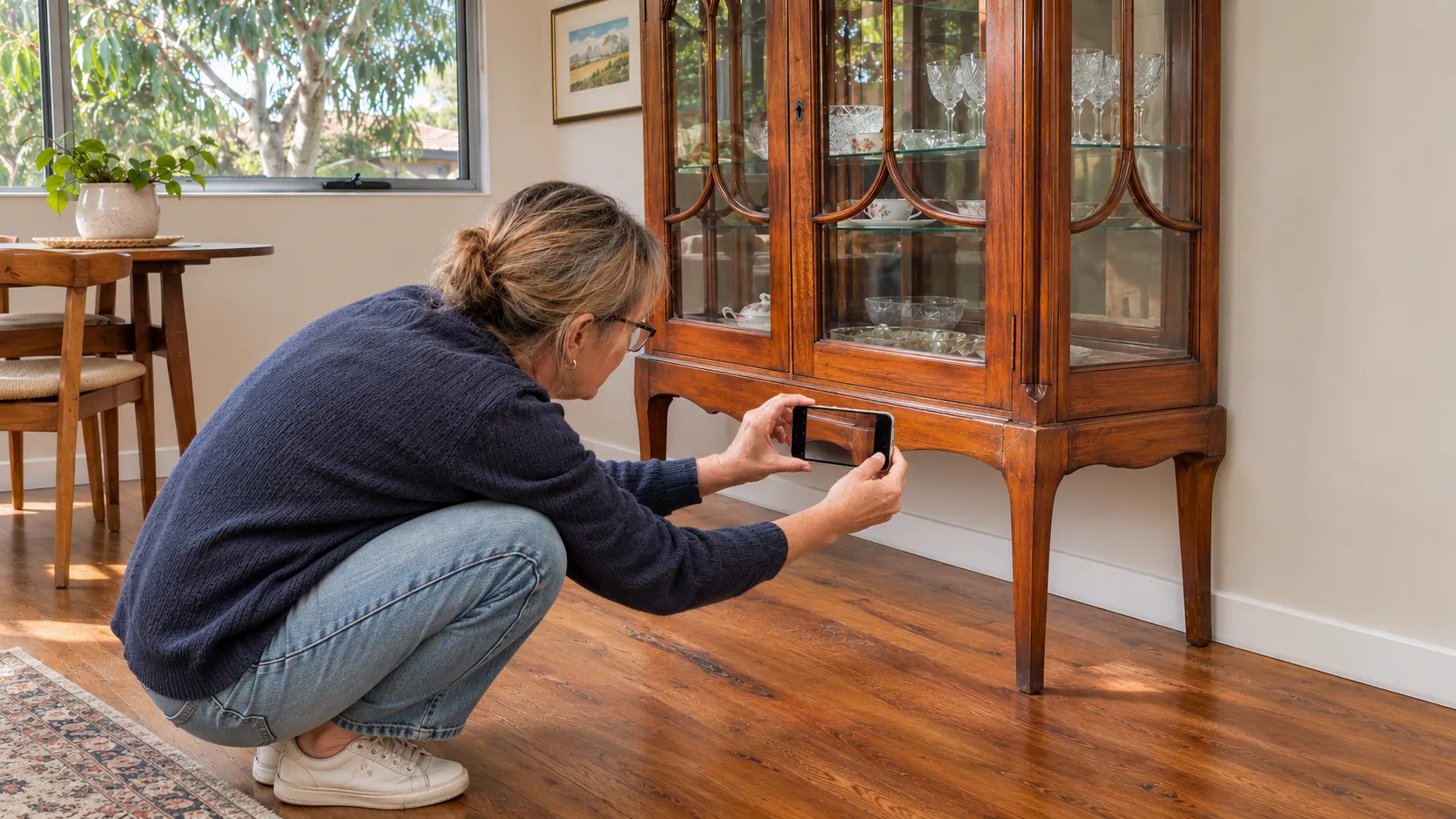
Start with the cabinet's history. Mention any previous repairs, known movement in the frame or occasions when a door has stopped sitting squarely. If a foot has been repaired or a corner has always seemed weak, explain that even if the area currently looks tidy. A repaired surface does not necessarily reveal how much support lies underneath. The Western Australian Museum recommends checking for weak points and previous repairs before moving older objects.
Look for visible gaps at joins, cracks around the base and sections that appear out of alignment. Photograph these from an accessible position rather than tipping the furniture to inspect underneath. Do not pull on handles or rock the cabinet to check its strength. If a concern cannot be assessed without moving it, leave that to someone experienced.
Older cabinets can have heavy upper sections supported by slender legs or an aged base. Discuss where the piece can safely be supported. Handles, decorative rails and projecting tops should not be assumed to be lifting points simply because they are easy to grip.
Point out every glazed area, including side panels and glass shelves that may not be obvious in a photograph. Tell the team about visible cracks, rattling panes or loose retaining strips. Do not press on the glass to demonstrate a problem. Protecting cabinet glass involves considering movement within its frame as well as contact from outside.
Carved corners, raised mouldings and decorative crests also deserve close photographs. A detail that barely projects beyond the cabinet can still catch on wrapping or receive pressure during handling. Include the whole cabinet in one image, then add close-ups so they understand where each vulnerable feature sits.
If you are comparing removalists in Maitland, ask whether the photographs provide enough information or whether the cabinet needs an in-person assessment. Also, ask what further advice may be needed if its condition makes ordinary handling unsuitable.
A cabinet can arrive with its frame intact yet still suffer scratches, impressions or patches of lifted finish. Moving antique furniture therefore requires decisions about what touches the surface, where pressure falls and how protective materials are secured.
There is no single wrapping method that suits every old finish. Share any known sensitivity with the removal team, including surfaces that feel tacky, show flaking or have previously marked beneath a covering.
Dust and grit caught between a cabinet and its covering can act as an abrasive when the load moves. Protective materials should be clean and in suitable condition, but that does not mean you should polish or treat the cabinet immediately before collection. A new product may leave residue or change how a surface reacts beneath its protection.
Ask the team which material will sit directly against the finish and why it is suitable. A soft-looking covering is not automatically safe for a surface that is lifting, powdery or unusually delicate. If the finish appears unstable, seek advice from a furniture conservator before wrapping. General moving experience does not replace specialist advice about deteriorating coatings.
Make this discussion part of preparation rather than a doorstep decision. The benefits of booking your move in advance include having time to share photographs and clarify if further assessment is needed.
Adhesive tape should not be applied directly to an antique finish. Removing it can leave residue or lift a vulnerable surface layer. The same caution applies to labels placed on timber, veneer or decorative surfaces. Put identification on the outer protective covering instead.
Do not assume that tape is harmless on old glass either, specifically where it could touch painted decoration or surrounding timber. Know how doors and protective coverings will be secured without relying on adhesive against the cabinet itself.
Stretch film is not a substitute for choosing an appropriate contact layer, especially where the finish is unknown. Moving experts should consider how to secure the covering without creating excessive pressure or allowing it to rub against vulnerable details.
Wrapping a whole cabinet tightly can transfer pressure onto the very features that need protection. A raised carving or narrow moulding may sit proud of the main frame, meaning a taut covering bears against it first. Simply adding more layers does not necessarily solve that problem.
Ask how projecting details will be protected without being compressed. Doors and handles also need consideration so that a securing method does not strain an old hinge or pull against a fragile fitting.
If the proposed approach relies on removing a decorative component, clarify if it is genuinely designed to come off. An uncertain fixing should prompt assessment, not an attempt to make the cabinet easier to wrap.
Emptying a cabinet usually makes preparation safer and more predictable, but removing its contents is different from dismantling the furniture. Loose belongings should not be left inside to slide against doors, glass or internal partitions during transport.
Shelves and fittings need a more selective approach. Readily removable pieces can often be protected separately, while stuck, fragile or structural components should remain untouched until assessed.
Remove books, crockery, ornaments and other belongings before the removal team arrives, provided you can access them safely. Even soft items can conceal something heavy or put pressure on a weak back panel when packed tightly inside. An empty interior also allows the team to see loose shelves and other concerns more clearly.
Do not use drawers or cupboards as convenient packing boxes for unrelated belongings. Their contents add weight, while an old drawer base or internal shelf may not tolerate the movement of a loaded cabinet. Pack the contents separately and identify the room they belong in so you can leave the cabinet empty until it is ready to use again.
When moving inherited furniture, take photographs before emptying it if you want a record of how collections were arranged. Photos can preserve that reference without leaving delicate objects inside. Keep the images with your moving notes rather than attaching them to the cabinet.
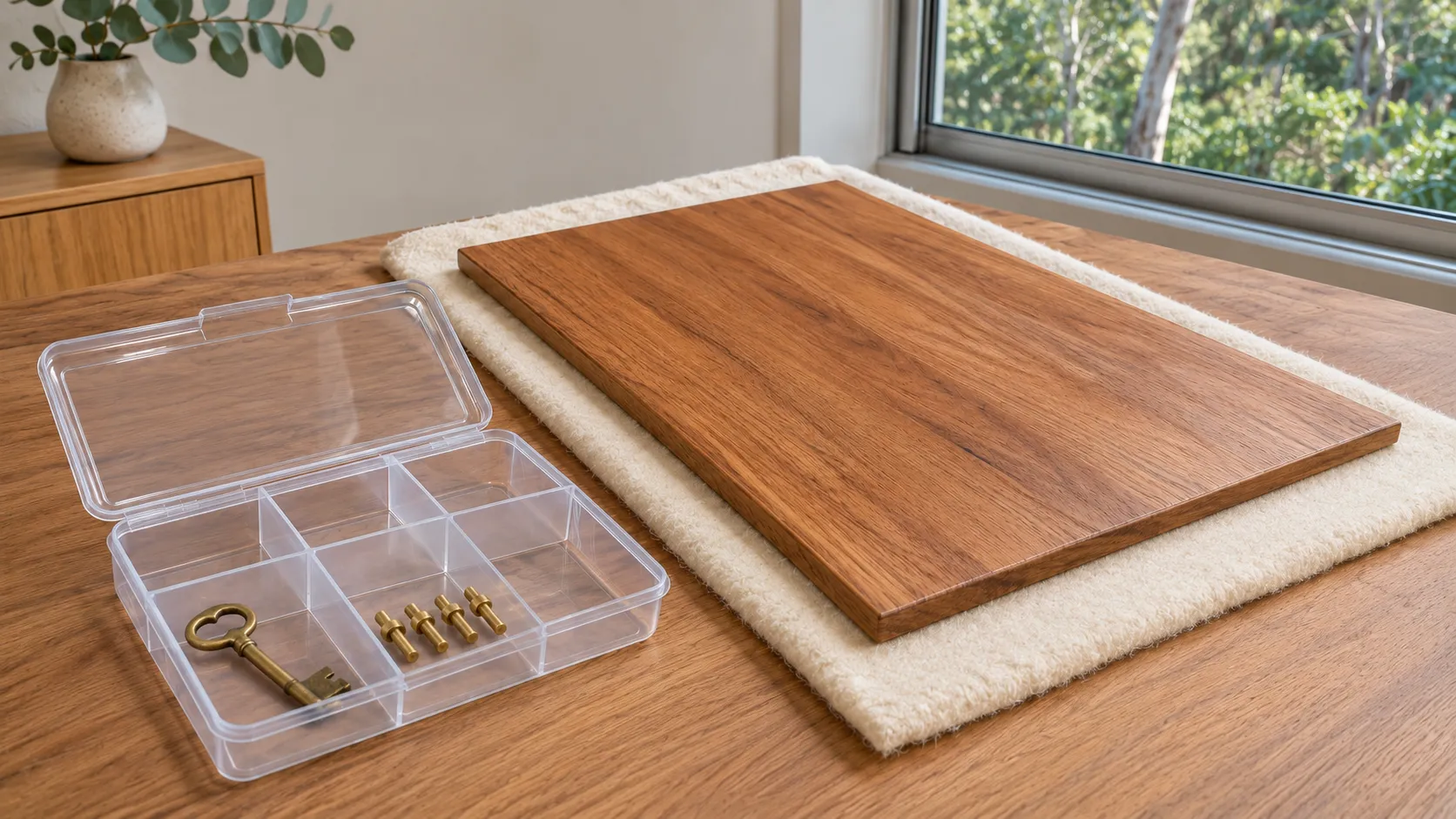
If a shelf is clearly designed to lift out and comes free without force, discuss separate packing with the removal team. Glass shelves need individual protection and clear identification. Timber shelves should also be protected from rubbing and have their position recorded where different sizes could confuse later.
Keep loose shelf supports, keys and other small fittings together in a labelled container. Identify which cabinet they belong to and arrange who will keep them during the move. Never tape a bag of fittings directly to the finished furniture.
Your broader moving organisation plan can include a simple record of separately packed components and their location.
Stop if a shelf binds, a fixing resists or a component appears attached to the cabinet's structure. Do not pry, loosen old screws or remove doors to reduce weight. What looks like a removable fitting may be fragile, previously repaired or important to the cabinet's stability.
After delivery, let the removalists check that the cabinet is settled and stable before you refill it. Do not load shelves if supports are missing, the frame appears out of square or a door now catches.
If you notice a change, photograph it and raise it promptly. Any uncertainty about damaged joints, unstable glass or deteriorating fittings should be assessed before the cabinet returns to use.
Protecting an inherited cabinet involves more than wrapping its surfaces and arranging enough people to lift it. Its age, previous repairs, construction and decorative details all influence how it should be prepared, supported and transported. Taking photographs, emptying the interior and identifying fragile components can prevent avoidable problems during relocation.
Hunter Coalfields Removals will assist homeowners in planning their move with consideration for valuable and delicate household belongings. By discussing the cabinet's condition, access requirements and handling needs before collection, you can make better-informed decisions about its relocation and give it the attention it deserves.

