
Moving a book collection involves more than packing titles into cartons. Without a clear system, carefully arranged shelves can become difficult to recreate, while heavy boxes and delicate covers need extra care during transport. A little preparation can help keep books organised, protected and easy to locate after the move.
For households moving in Maitland or the wider Hunter Valley, Hunter Coalfields Removals can plan the move around the collection's size and handling needs. By recording shelf arrangements, using manageable cartons and planning the new storage space, it becomes easier to settle the library into its new home without losing track of favourite titles.
The easiest way to preserve your book arrangement is to record it before removing anything from the shelves. Whether the collection is organised alphabetically, by subject or according to a personal system, a few photographs and clear labels can help recreate the original layout.
There is no need to catalogue every title unless you already maintain a detailed inventory. The goal is to capture enough information to identify each group and return it to the correct place.
Take a clear photograph of every shelf, making sure the book spines are visible wherever possible. Include a wider photograph of the entire bookcase to show how the shelves fit together. Check that titles are readable, specifically when glossy covers reflect light or books sit behind a front row.

Give each bookcase a simple reference, such as A, B or C, and number its shelves from top to bottom. This creates an easy system for identifying each group. For example, A1 refers to the top shelf of bookcase A, while A2 refers to the shelf directly below it.
If a shelf contains two rows of books, record which titles belong at the front and back. This small detail can prevent confusion when restoring a tightly arranged collection.
Pack one shelf group at a time and transfer its reference to the relevant cartons. A label like “A2, Box 1 of 3” identifies the original shelf and the carton's place within the group. Include the destination room as well, if the collection will be stored in a study, living room or spare bedroom.
If you do not know how many cartons a group will require, number each box as you pack and add the total afterwards. Keep a short list of the references and carton numbers so split groups remain easy to track. Avoid vague labels such as “miscellaneous books”, which provide little help when unpacking.
The same approach fits a broader plan for keeping your move organised: a clear reference should tell you where a carton belongs without requiring you to open it.
Treat a book series or reference collection as one group, even if its weight requires it to travel in several cartons. Add a short description alongside the shelf reference, like “History Set, Volumes 1 to 4”. This preserves the relationship between the books without forcing them into one oversized carton.
Books that need to remain accessible should be recorded separately. Current reading, borrowed titles and books due to be returned can go into a clearly marked carton or small bag. This makes them easier to find without unpacking the main collection and helps prevent borrowed books from being overlooked.
Books need cartons selected for their weight rather than just their volume. A large box may appear suitable for a substantial collection, but filling it can make it difficult to lift and increase the risk of the base failing.
Smaller cartons, sensible grouping and secure packing materials help keep the collection manageable. The right approach also depends on the condition of the books and the handling arrangements for the move.
Use sturdy cartons with intact seams, dry surfaces and secure bases. Avoid boxes with torn corners, weakened cardboard or signs of moisture, as dense book collections can put considerable strain on their structure.
Stop adding books when a carton becomes awkward to handle, even if there is still room inside. Fill remaining gaps with lightweight cushioning rather than adding more books, and close the lid without pressing it down onto the contents. A heavy label helps with identification, but it does not make an overloaded carton safe.
Keep packed cartons accessible for the moving crew instead of stacking them in a difficult-to-reach corner. When comparing removalists in Maitland, explain how many bookcases need to be emptied and whether the collection includes oversized art books or substantial reference sets. Removalists can use these details when discussing the move. Mention stairs, narrow hallways or restricted access that may affect handling.
SafeWork NSW’s guidance on managing manual handling risks explains why load weight, awkward postures and access conditions should be considered when planning how the moving crew will handle packed cartons.
Books of similar sizes fit together with fewer gaps. Suitable books can stand upright on their bottom edges, supported by neighbouring books, or lie flat in stable stacks. Avoid placing them with their spines facing upwards, as this can put unnecessary strain on the bindings.
Separate large hardbacks, illustrated books and oversized volumes when they do not fit comfortably with smaller titles. Retain the original shelf reference on each carton and add a brief description, such as “A3, Oversized Books”. Your photographs will show where these books belong when the collection is unpacked.
For a strict alphabetical arrangement, keep small batches in sequence and record the first and last author on each carton. That is usually more useful than listing every title. Sensible grouping also complements other packing and planning choices that can help control moving costs.
Use clean packing paper to protect delicate covers, dust jackets and books with easily marked surfaces. Place lightweight cushioning between vulnerable items where needed, and arrange the contents so books cannot slide around during transport. Avoid forcing books into tight spaces or bending their corners to make the final item fit.
Older books, damaged bindings and valuable editions may need individual protection and gentler handling. Keep them separate from heavy volumes that could press against their covers. For valuable or fragile items, ask the removalist about suitable handling and packing arrangements before moving day.
Moisture also needs attention. Never seal damp books into cartons with the rest of the collection, as trapped moisture can encourage mould and damage paper. Check books stored against cool walls or in rarely opened cupboards, and make sure cartons and packing materials are completely dry before use. Keep packed books away from damp floors and walls while they are waiting to be transported.
Moving into a new home does not always mean recreating the original shelves exactly. Different bookcase dimensions, room layouts and storage needs may require a revised arrangement. The important thing is to preserve the collection's organisation while adapting it to the available space.
Plan the shelving first, then unpack in labelled groups. This makes the original shelf references useful without forcing the new room to follow a layout that no longer works.
Measure the usable width, height and depth of each shelf rather than relying on the overall dimensions of the bookcase. A unit may offer less practical storage than expected if its shelves are too shallow for large books or too closely spaced for taller volumes.
Check the manufacturer's load guidance before filling the shelves. Books can place substantial weight on shelving, especially when packed closely together. If the load capacity is unclear, seek advice from the manufacturer or a qualified professional rather than testing the shelf by filling it. Any required installation or anchoring should also be handled by experts.
For guidance on securing bookcases in the new home, see the ACCC’s advice on preventing furniture tip-overs.
Use your original shelf references as a map rather than a fixed layout. A collection that occupied two shelves in the old home might need three in the new one. Keep related books together and preserve their internal sequence while adjusting where each group begins and ends.
If the new room has less capacity, decide which books need priority shelf space before opening every carton. Reviewing duplicates and titles that are no longer needed can reduce the amount of storage required. Decluttering your home before moving day provides additional ideas for sorting belongings before the move.
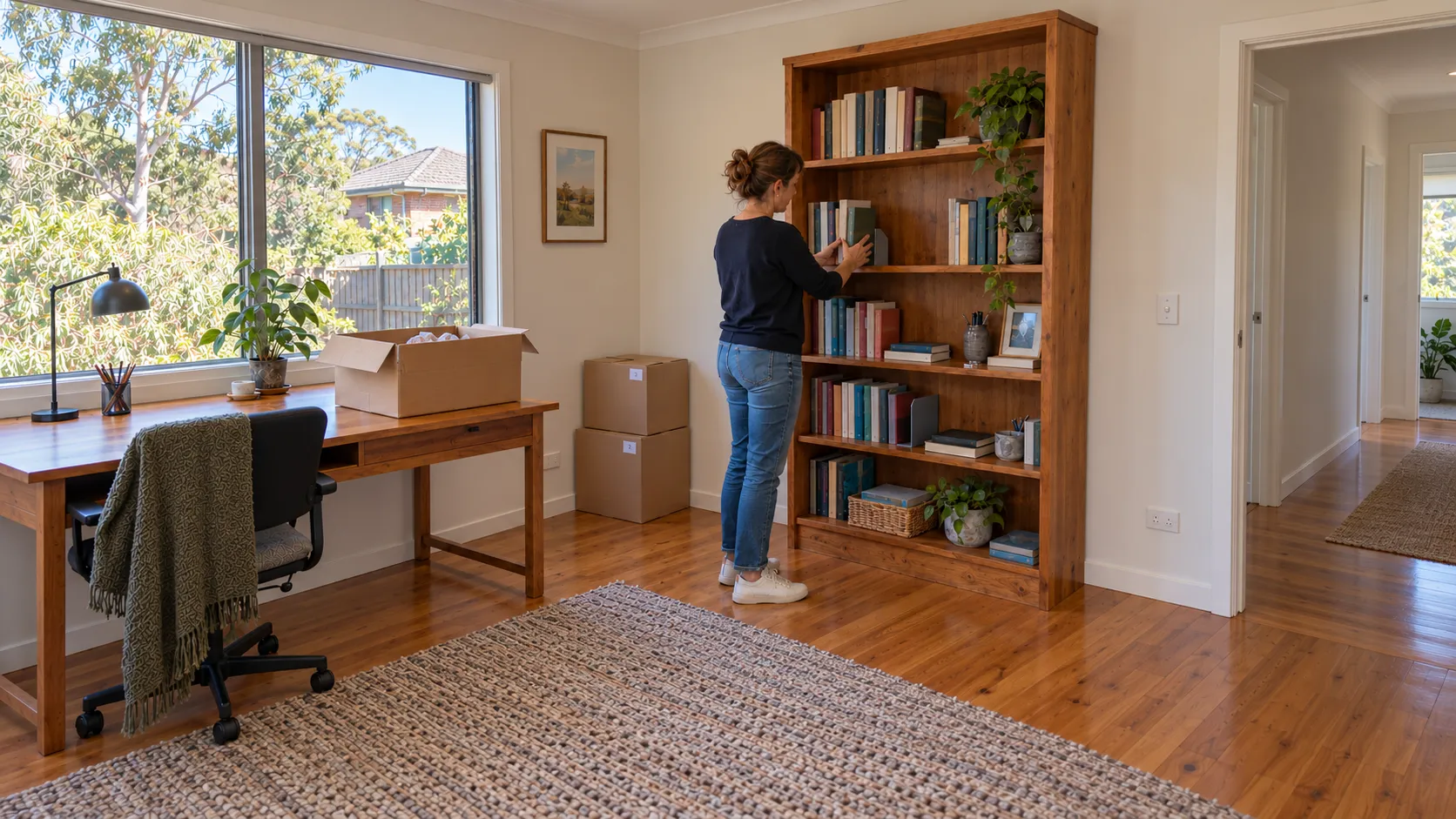
Choose one shelf group, check its photographs and open the relevant cartons in sequence. Whenever possible, transfer books directly to their intended shelves rather than emptying several boxes onto the floor. This keeps groups separate and prevents books from obstructing access through the room.
If a group has been split between cartons for different book sizes, bring those cartons together before shelving. The original photographs will show how the books were arranged, while the labels identify which carton contains each part of the collection. Keep the labels visible until the group is complete.
If the new layout differs from the original, update your list with the new location. A note such as “Old A2, now study, shelves 3 and 4” is enough to keep the record useful. Any cartons that remain unopened should be stored in a dry area away from damp walls and floors.
Unpack current reading, frequently used reference books and other favourites early, even if the permanent shelving is not ready. Give them a temporary, dry location where they will not be buried beneath other belongings or mixed with books that are still waiting to be sorted.
Leave some flexibility in the new arrangement rather than squeezing every shelf full immediately. A particular subject may work better near a desk, while a favourite series might be easier to reach at eye level. Keep the photographs and carton list until every group has a settled place and the books used most often are easy to find.
Moving a library is easier when the collection is recorded before packing, divided into manageable cartons and unpacked according to a clear plan. A few photographs, consistent shelf references and suitable protection can save time while helping keep books organised and in good condition.
Hunter Coalfields Removals can discuss the collection's size, access requirements and handling needs as part of the moving arrangements. With the right preparation, the books can arrive ready to be organised in their new home rather than becoming another sorting task.

