
After moving into a new home, one of the last jobs left is dealing with the stack of empty boxes that quickly builds up in the garage, spare room or hallway. It is a familiar situation for households across the Hunter region, where unpacking may be finished but the question of what to do with leftover cartons still remains. Hunter Coalfields Removals understands that moving boxes can still be useful well after moving day, and handling them properly can save space, reduce waste and help make the home feel settled sooner.
This article looks at the most practical ways to deal with used moving boxes once unpacking is complete. For households searching for advice after using removalists in Maitland, it explains how to reuse cartons around the home and garden, prepare good-quality boxes for giveaway or resale and recycle damaged cardboard properly. It also covers when it makes sense to keep boxes for future use and what local council or recycling considerations may affect households in the Hunter Coalfields area.
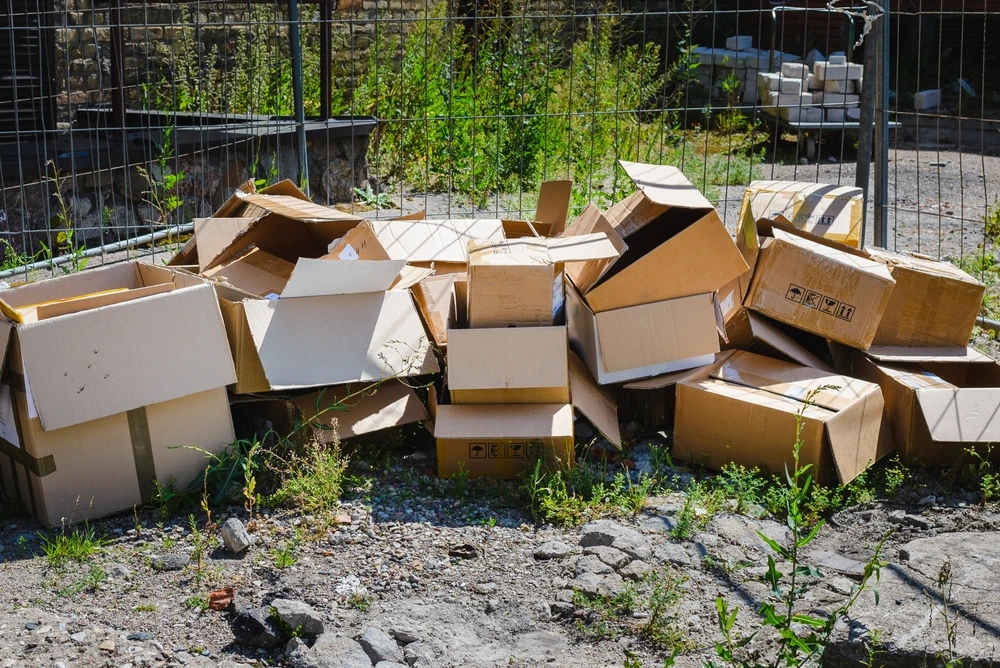
Sturdy moving cartons often have plenty of life left in them once the last room has been unpacked. Rather than sending every box straight to recycling, it often makes sense to look at which ones can still serve a practical purpose around the property. Reusing boxes reduces waste, saves money on storage materials and helps keep the new home organised while everything settles into place.
A useful first step is sorting boxes by size and condition. Clean, dry cartons with strong corners and intact bases are the best candidates for reuse. Boxes that are slightly worn can still be useful for temporary jobs, while those with serious water damage, crushed sides or split seams are usually better recycled.
Moving boxes can be repurposed for simple storage throughout the home. Medium cartons work well in pantries, laundries and spare rooms for holding bulk supplies, kitchen overflow, kids’ craft materials or items that are only used occasionally. When clearly labelled, they make shelves and cupboards easier to manage without the immediate need to buy tubs or baskets.
Flatter cartons can also be useful in wardrobes, linen cupboards and under-bed spaces. They suit spare bedding, off-season clothing, shoes, soft toys or keepsakes that do not need to be accessed daily. Reinforcing the base with fresh packing tape can help extend their usefulness, particularly if they will be moved in and out regularly.
Smaller book cartons are especially handy in home offices or study areas. They suit archived paperwork, tax records, manuals, notebooks and stationery, and can even be cut down to create open-top document holders. This is a practical way to create order quickly in a new home without spending extra money on storage products straight after a move.
Garages and sheds can also benefit from reused cartons, provided they are only used for light to medium items. Camping gear, seasonal decorations, sports equipment, ropes and tarps can all be stored effectively in cardboard. Heavy tools, sharp items or anything vulnerable to moisture is better suited to tougher storage options, but cardboard still has plenty of value for general organisation.
Used cardboard can also be surprisingly helpful outdoors. Plain brown boxes without glossy coatings are the most useful for garden projects. One of the best-known uses is as a weed barrier. Flattened cardboard laid over grass or weeds and covered with mulch can help suppress growth while slowly breaking down into the soil.
Cardboard can also be placed at the base of raised beds or large garden areas to reduce weed growth during initial setup. As it decomposes, it allows roots to move through while helping retain some moisture in the early stages. This makes it a useful short-term material when tidying or establishing new garden spaces after a move.
Even where boxes are not being used directly in soil, they can help organise pots, seed trays, tools and other loose garden supplies during post-move clean-ups. They may not be a permanent solution outdoors, but they can certainly make the settling-in period more manageable.
Giving moving boxes to another household is one of the simplest and most useful ways to extend their life. Good-quality cartons often survive several moves, which makes them valuable to people who are trying to keep packing costs down. Passing them on also reduces waste and helps useful materials stay in circulation within the local community.
This option works best when the boxes are still clean, strong and fairly uniform in size. A neatly sorted bundle is far more useful to the next person than a messy pile of half-damaged cartons. With a little preparation, used boxes can become an easy giveaway that genuinely helps someone else.
Before giving boxes away, it helps to check each one properly. Boxes that are bent out of shape, badly torn, mouldy or softened by water are usually not worth passing on. The most useful cartons are those that still hold their shape, fold flat neatly and remain strong enough to be stacked when packed.
Sorting boxes into small, medium and large sizes makes them much easier for the next person to use. Grouping similar cartons together helps with packing efficiency and transport planning. It also presents the boxes as something worthwhile rather than leftover clutter.
Removing loose tape, flattening the cartons and covering old handwritten labels can also make a big difference. A simple, tidy bundle is more likely to be collected quickly and appreciated by the next household.
The easiest place to start is often with personal networks. Friends, neighbours, workmates and local school families may already know someone who is preparing for a move. In many cases, the boxes can be rehomed without much effort simply by asking around.
If that does not work, local online community groups and noticeboards are often effective. Suburb-based Facebook groups, buy nothing pages, community centres and supermarket boards can all help connect households with spare boxes to those who need them. A clear post should include the suburb, approximate quantity, box sizes and whether the cartons are flattened for pickup.
Setting a collection deadline also helps prevent boxes from lingering in the garage for weeks. The clearer the arrangement, the more likely it is that the cartons will be picked up promptly.
Once someone has agreed to take the boxes, the handover should be kept simple. Flattened cartons can be stacked neatly in a garage, carport or covered verandah so they stay dry and easy to collect. Tying them into bundles with string or placing them inside one larger box can make them easier to carry.
It can also help to let the next person know which boxes are best for heavy items and which are more suitable for bulky but lighter belongings. Even a quick note or short message can make the bundle more useful and reduce the chance of boxes being misused or damaged too quickly.
When boxes are too damaged to reuse or there are simply too many to keep, recycling is usually the next best option. The key is to prepare them properly so they fit inside the bin, do not create a mess on collection day and are more likely to be accepted by local recycling services.
Bulky cardboard takes up far more room than people expect, especially when it has not been flattened correctly. A bit of time spent cutting and folding boxes properly can turn an awkward pile into a compact stack that fits easily into a standard household recycling bin.
Before putting cardboard into recycling, remove anything that is not cardboard or paper. This includes bubble wrap, foam inserts, plastic corner protectors, large tape strips and any plastic wrapping still attached to the cartons. A small amount of tape is often tolerated, but thick layers should be removed where practical.
It is also worth checking for contamination. Wet cardboard, greasy residue and mould can affect whether the material is recyclable. If a box is badly soiled or falling apart, it may need to go into general waste instead.
The easiest way to break boxes down is to open the taped seams at the top and bottom and fold the box back along its original creases. Most moving cartons collapse quickly once the base tape is cut. This alone is often enough to make them manageable for standard household bins.
Flattened boxes should be stacked together before going into the bin so the total volume is easier to judge. This helps avoid overfilling and reduces the chance of the lid being left open, which can prevent collection.
Larger boxes such as wardrobe cartons or oversized appliance boxes often need to be cut into smaller panels. A practical way to do this is to stand the flattened sheet against the recycling bin, mark the height and trim it into sections slightly shorter than the bin. These panels can then be folded neatly and stacked vertically inside.
Packing flattened cardboard vertically rather than loosely dropping it in usually makes better use of space. It also helps the lid close properly, which is important because many local collection services will not empty bins that are overflowing.
If there is still too much cardboard to fit in one cycle, the remaining stack can be stored neatly for the next collection or taken to a local recycling facility instead.
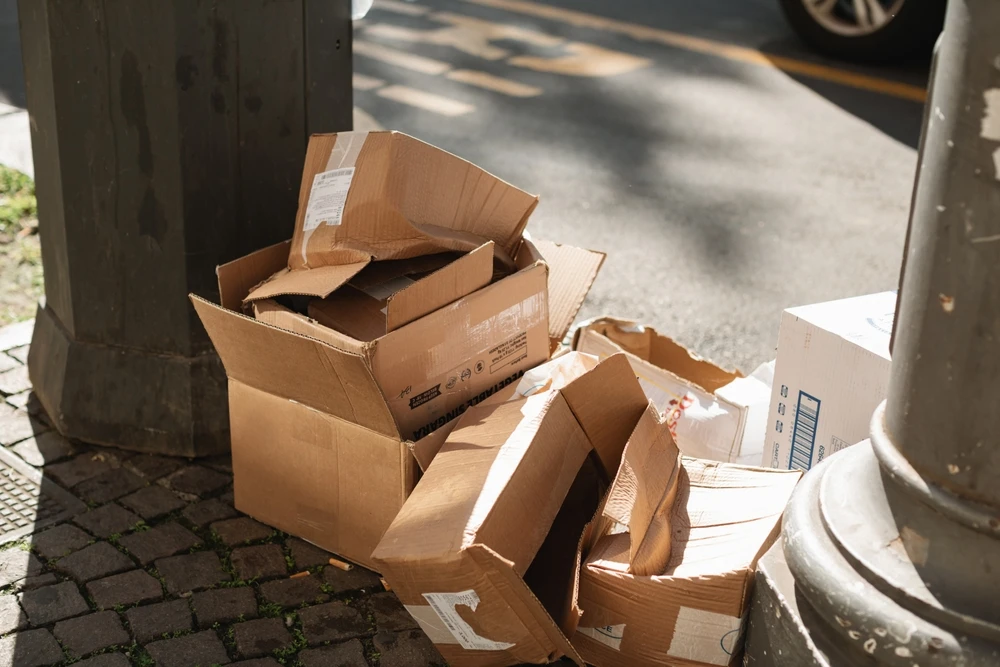
For households with a very large number of boxes, especially after a full-family move, council cleanup services may be worth considering. Rather than trying to feed cardboard into the recycling bin over several weeks, a booked collection may provide a faster way to clear the backlog.
This can be useful where there are also other unwanted post-move items to dispose of, such as broken outdoor furniture, damaged shelving or bulky household waste. However, it is important not to assume that cardboard is automatically accepted.
Each council has its own rules about what can be included in a booked cleanup or bulk waste collection. Some accept flattened cardboard if it is bundled correctly, while others prefer households to use regular recycling services or take cardboard to a waste facility instead.
Checking the relevant council website before placing anything on the kerb is essential. Key details include whether cardboard is accepted, whether bundles must be tied, how much material can be put out and how early items can be placed on the nature strip. If the information is unclear, contacting the council directly is the safest option.
Where cardboard is accepted, proper preparation usually matters. Boxes should generally be emptied completely, flattened and tied into manageable bundles. This keeps the load tidy, makes it easier for collection crews to handle and reduces the risk of cardboard blowing around in bad weather.
Wet or contaminated cartons may not be accepted, so it is worth keeping bundles under cover until close to pickup time if rain is expected. Presenting the material neatly also makes it more obvious that it is recyclable rather than general rubbish.
Because many councils limit the number of cleanups available each year, it often makes sense to combine the cardboard disposal with other genuine post-move decluttering. Doing one organised cleanup shortly after unpacking can clear space more efficiently and help the household settle in sooner.
When there are too many boxes for the bin and cleanup services are not the right fit, a recycling facility is often the most practical solution. This is especially useful for households that want to clear everything quickly rather than waiting for weekly bin collections.
Many waste and recycling centres in the broader Hunter region accept flattened cardboard from households, either free of charge or for a small fee. This can be one of the easiest ways to deal with a large post-move pile responsibly.
Before taking boxes to a recycling centre, flatten them fully and remove as much tape, foam, plastic and metal as possible. Clean cardboard is more likely to be accepted and processed efficiently. Boxes that are heavily stained, soaked through or mouldy may still need to be separated out for general waste.
Loading the cardboard flat in a car, trailer or ute also makes drop-off easier. It saves space and speeds up unloading at the facility.
Council websites usually provide information on waste depots, transfer stations and other local recycling options. It is worth checking opening hours, fees and whether household drop-offs are accepted before making the trip. Some sites have clearly designated bays for cardboard, while others require materials to be sorted into different areas.
Where the move has generated other recyclable materials, such as scrap metal, old paper or certain plastics, a single organised trip can help clear everything at once.
A recycling run often works best as part of a broader tidy-up. Sorting materials at home into separate loads for cardboard, recyclables and rubbish can make the process faster and avoid contamination. One full trip is usually far more efficient than several smaller ones and can help restore order to the new property more quickly.
Not every box needs to be reused or given away immediately. In some cases, keeping a small number of strong cartons makes sense. This is particularly true where there are still items to unpack slowly, renovations are planned or another move may happen in the near future.
The key is being selective. Keeping every box “just in case” usually creates unnecessary clutter. Holding onto a few sturdy cartons in useful sizes is often enough for storage, returns, donations or future transport needs without filling half the garage.
Boxes worth keeping should be flattened, stored in a dry place and labelled if they are part of a matching set. This protects them from moisture and makes them easier to access later.
Dealing with empty moving boxes is one of the final steps in settling into a new home, but it is also an opportunity to be practical about cost, space and waste. Some cartons are worth keeping for storage or future use, some can be passed on to help another household and others are best recycled once they have done their job. The best approach usually involves a combination of all three.
By sorting boxes by condition, preparing them properly and choosing the right disposal method, households can clear their space more efficiently while reducing unnecessary waste. A simple cardboard box may seem like a leftover from moving day, but with the right handling it can still offer value long after the truck has gone.

