
Your workshop might occupy only a corner of the shed, but packing it can take more thought than packing an entire room. A small carton of spanners can become unexpectedly heavy, a loose saw can damage neighbouring belongings and an oily tool case can leave marks on furniture coverings.
If you are moving workshop tools alongside your household belongings, the aim is to make each item safe to handle, clearly identified and ready for transport. Hunter Coalfields Removals can help you plan the moving arrangements for accepted workshop equipment as part of your move. Knowing how to divide dense tools into manageable containers, identify items that need advance approval and keep shed residue away from furniture can make the process easier for everyone involved.
Tools need to be packed according to their weight and shape, not simply the space available in a box. Metal hand tools concentrate considerable weight into a small area, so a carton that looks half empty may already be too heavy for its base or handles.
SafeWork NSW’s guidance on manual handling risks explains why the size and weight of a load, along with the force and posture involved in handling it, need to be considered.
Before packing hand tools, ask your movers about suitable containers and any weight limits they want you to follow. There is no single box size that suits every tool collection, and choosing manageable containers is more important than reducing the number of boxes.
Divide spanners, sockets, clamps and similar items across several small, sturdy containers rather than filling one large carton. Check that each container has a sound base and secure closure. An old carton with softened corners is a poor choice for a heavy load of metal tools, even if it previously held lighter household goods.
Keep related pieces together in smaller closed compartments or pouches, then cushion them so they cannot shift freely inside the outer container. Avoid placing loose metal tools directly against cardboard where repeated movement could wear through it.
Do not judge a packed box by whether you can briefly lift it. It also needs to withstand carrying, handling and transport. If it feels awkward or surprisingly heavy, split the contents rather than adding another layer of tape. Label it with its contents and flag the weight, but remember that a heavy label does not make an overloaded carton suitable. These suggestions on choosing moving boxes will help you assess your packaging options.
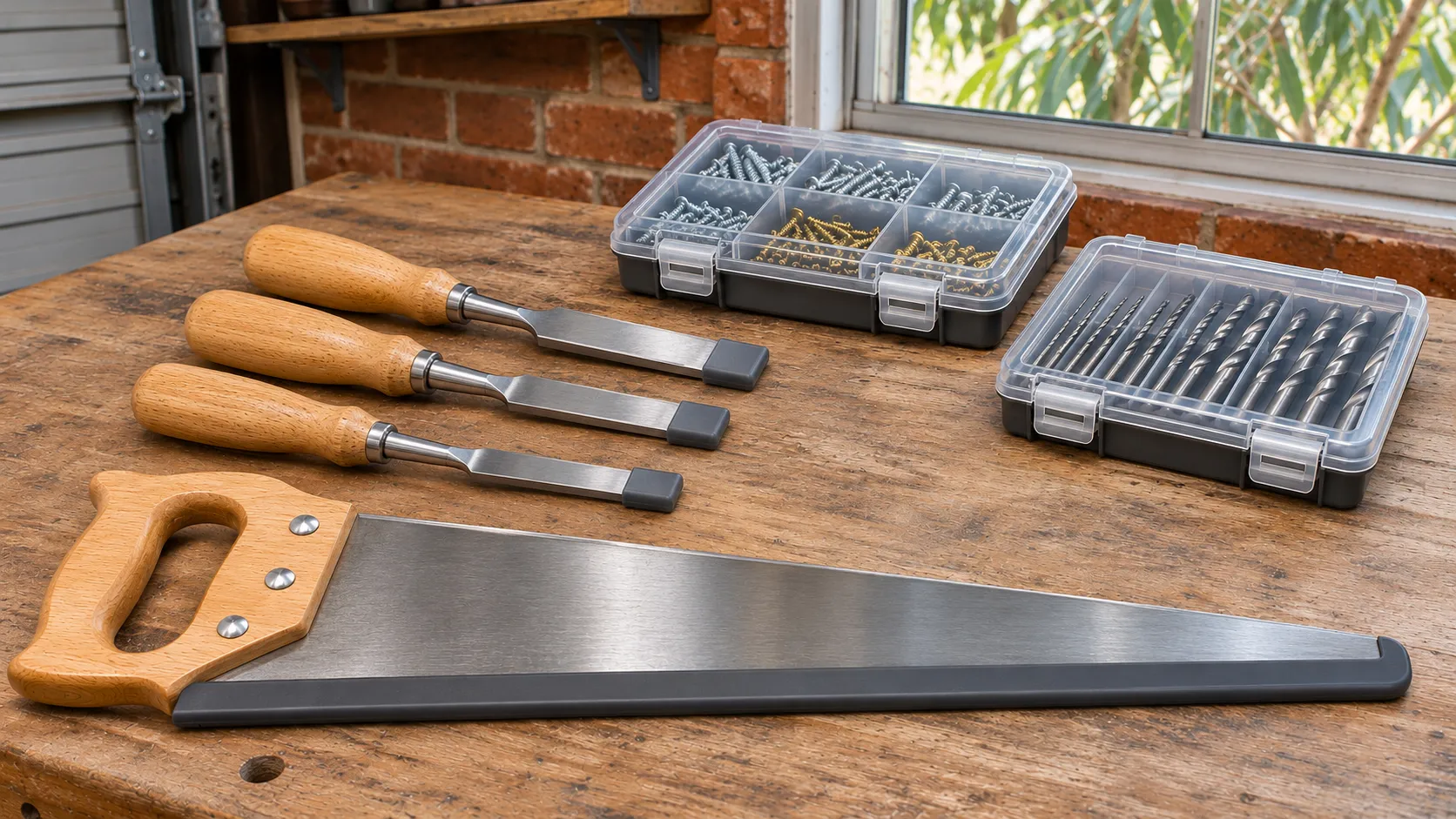
Use fitted guards or sheaths for cutting edges where available. Otherwise, use suitable rigid edge protection that cannot easily be punctured, then secure it without leaving an exposed blade. Soft wrapping alone may not provide enough protection for saw teeth, chisels or other sharp points.
Put screws, drill bits and small fittings in closed, labelled containers. Keep these with their relevant tools where practical rather than dropping loose pieces into a general workshop box. A brief contents label helps you find a needed item without opening every carton at the destination.
Moving a tool chest requires an assessment of its weight when loaded, dimensions, condition and drawer security. Wheels make a chest convenient around a workshop, but they do not establish that it can safely be transported full or simply rolled onto a truck.
Heavy tools inside drawers can shift during lifting and transport, affecting the chest's balance or causing drawers to open unexpectedly. Send the removal team photographs and explain what is inside. Ask whether drawers need emptying and how the chest should be prepared.
Check drawer catches and locks, but do not assume a key lock alone will restrain loaded drawers during handling. Leave the lifting method and transport restraints to the removal team.
Some workshop contents cannot be treated like ordinary household cartons. Products that can leak, ignite or release fumes need to be disclosed, while batteries and fixed equipment may require specific handling or preparation.
Identify these items before packing begins so you can establish which can be transported, which are excluded and what alternative arrangements may be needed. An item being part of your home workshop does not automatically make it suitable for transport with furniture.
Prepare an inventory of paints, solvents, adhesives, fuels, oils, aerosols and gas cylinders. Include the product name, container size and condition, with photographs of labels where useful. Tell the removal team about leaks, damaged containers or unidentified contents rather than describing everything as shed supplies.
When comparing a removalist in Hunter Valley, ask which items can be accepted, which are excluded and what preparation is required for anything approved. Do not assume that movers transport chemicals, gas cylinders or fuel-containing equipment without explicit confirmation.
Keep original labels visible and do not decant products into unmarked containers to make them easier to pack. If an item is not accepted, arrange an alternative or seek advice from your local waste service about disposal. The NSW EPA’s Household Chemical CleanOut services provide disposal options for household quantities of paints, solvents, fuels and other chemicals. Check accepted items, quantity limits and collection locations before making arrangements. Never put a restricted or leaking product into a furniture carton or leave it for the crew to discover on moving day.
Identify cordless tools, spare batteries and chargers separately when preparing your workshop inventory. Explain the battery type if known and disclose any battery that is swollen, leaking, unusually hot or physically damaged. Do not pack a damaged battery into the household load while waiting for a decision.
For approved cordless tools, follow the manufacturer's instructions about removing detachable batteries and preparing the equipment. Where batteries are permitted to travel separately, know how they should be protected against accidental activation, impact and contact with loose metal objects. Keep battery terminals protected as required by the applicable transport instructions.
A battery rolling around among screws and spanners is not appropriate containment. Likewise, do not leave detachable batteries loose inside a tool case where they can move during handling.
Do not attempt to repair, open or improvise packaging for a damaged battery. Seek specialist advice about safe handling and disposal, and make any transport exclusion clear in your packing notes.
A compact workbench can still be exceptionally heavy with a thick top, vice or attached equipment. Provide dimensions, construction details and photographs so the removal team can assess whether it falls within the agreed household move.
Explain whether equipment is freestanding, bolted down or connected to building services. Fixed electrical equipment needs assessment and disconnection by a licensed professional where required. Do not attempt electrical disconnection yourself or assume the moving crew will perform it.
Ask who is responsible for any approved dismantling and what condition the item must be in for collection. Heavy or industrial equipment should not be assumed to be included. Keep the agreed inventory and exclusions with your moving paperwork so the workshop arrangements remain clear.
Workshop dirt does not need to spill dramatically to cause trouble. Fine dust, oily handles and greasy undersides can mark cartons, transfer onto protective coverings and eventually reach upholstery or other clean surfaces.
Once you have identified which workshop items can travel with your household belongings, prepare accepted tools and equipment so they do not transfer dirt or residue onto other possessions. The aim is not to make well-used tools look new, but to prevent ordinary workshop grime from spreading through a combined household load.
Inspect tool cases and equipment externally, including handles, bases and the surfaces that will touch wrapping. For ordinary, non-hazardous dirt, clean according to the manufacturer's instructions and allow surfaces to dry before packing. Do not wrap over dampness or use protective materials to hide an unresolved leak.

Avoid stripping away protective lubrication that a tool needs. Instead, discuss how any remaining oily surfaces should be contained. If you find an unidentified residue or suspect contamination, stop and seek appropriate advice rather than brushing it off into the packing area.
For items the removal team has agreed to accept, use suitable individual containment that keeps residue away from the outside of the package. Ask about appropriate liners or wrapping where necessary. Keep outer handles and surfaces clean enough to handle without transferring grime to other belongings.
Containment is not permission to pack a leaking chemical or an otherwise excluded item. If oil or another fluid is actively escaping, tell the removal team and resolve the issue before packing proceeds. Do not rely on an absorbent layer to make it acceptable.
Keep workshop packing materials separate from clean household wrapping. Reusing a dusty shed blanket around upholstered furniture defeats the separation you are trying to achieve. Identify packages that still require particular handling, then let the removal team decide how accepted workshop items should be positioned and secured in the truck.
Before packing expensive tools, specialised equipment and complete tool chests, take photographs of their condition and contents. These images provide a useful visual record before the move and can help you identify items when unpacking.
Label accepted containers with both their contents and intended destination, such as "workshop: socket sets" or "shed: clean tool cases". Avoid vague labels like "miscellaneous", which make it harder to keep tools out of living areas during delivery.
Use a matching inventory to identify anything excluded from the truck or travelling under a separate arrangement. This approach to staying organised during your move also helps you check that each workshop container reaches the right place.
At the destination, nominate a clear area for workshop belongings and tell the crew which packages belong there before unloading begins. This keeps tools, accessories and other shed items together rather than having them scattered throughout the house.
Packing workshop tools for a household move involves more than finding enough boxes. Heavy hand tools need manageable containers, sharp accessories require protection and batteries, chemicals and fuel-powered equipment need to be assessed before transport. Keeping dirty or oily items separate also helps prevent workshop residue from reaching furniture and other household belongings.
Hunter Coalfields Removals can coordinate the agreed transport arrangements for your move, including accepted workshop belongings, so you know what needs to be prepared before moving day.

