
Finding the right removalists in Newcastle is only one part of preparing for a successful move. Parking restrictions, narrow streets, steep driveways, apartment access and difficult entry points can all affect how quickly and safely belongings are loaded or delivered.
Careful preparation before moving day helps reduce delays, protect furniture and property, and give the removal team the information needed to select the right vehicle, equipment and crew. This is particularly important around busy Newcastle streets, older inner-city properties, managed apartment buildings and sloping residential sites across the wider Hunter region.
Hunter Coalfields Removals encourages customers to confirm parking, property access, building requirements and special handling needs before the truck arrives. Organising these details early allows the removalists to plan the job accurately and helps the household settle into the new property with less disruption.
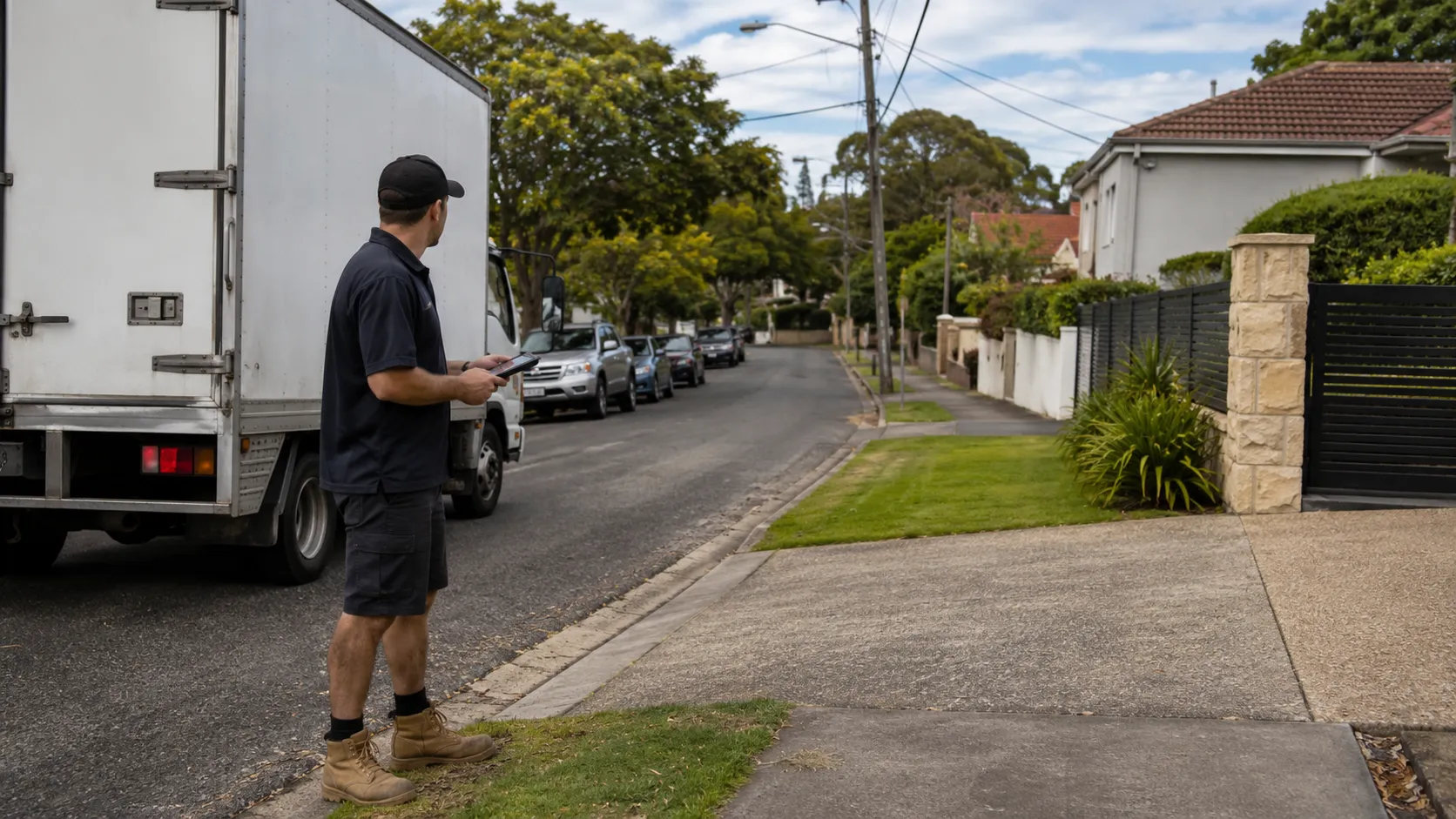
The location of the removal truck can significantly affect the duration and cost of a move. When a truck can park close to the main entrance, the crew can move furniture and boxes more efficiently. When parking is further away, belongings may need to be carried or transported by trolley over a longer distance.
The current property and the delivery address should both be checked before moving day. Do not assume that the parking conditions at one location will be the same at the other.
Inspect the street for:
Parking can be particularly limited around busy Newcastle centres, older residential streets and properties near shopping areas, schools or main roads.
Confirm whether the truck can legally park directly outside the property and whether there is enough room for it to enter and leave safely. If the truck cannot stop close to the entrance, estimate the carrying distance in metres and provide this information to the removal company.
A temporary parking permit, road occupancy approval or another form of council permission may be required when a truck needs to occupy restricted space for an extended period.
A temporary on-street parking permit may be available when a removalist van needs to remain in a restricted parking area for extended loading or unloading.
Contact the relevant local council well before moving day to ask:
Do not place bins, cones, portable signs or other objects on a public road to reserve space unless the relevant authority has confirmed that this is permitted. Unauthorised objects may create a hazard or be removed.
Where formal space reservation is unavailable, speak with neighbours in advance and ask them to leave the required area clear where possible.
Confirm whether the driveway can safely support and accommodate a furniture truck. Consider:
For rural or acreage properties, check that gates are unlocked, access tracks are firm and clear, and the vehicle can leave without reversing over a long distance.
Advise the removalist when access is suitable only for a van, ute or smaller truck. A smaller vehicle or shuttle arrangement may be needed when a standard removal truck cannot reach the property.
Restricted access is one of the most common causes of delays and property damage during a move. Measuring entry points in advance helps determine whether large items can be moved intact or need to be dismantled.
Inspect access at both the collection and delivery properties.
Use a tape measure to record the width and height of:
Compare these measurements with the largest items being moved, including sofas, refrigerators, bed frames, cabinets, dining tables and gym equipment.
Measure furniture at its widest and highest points, including arms, legs, handles and decorative sections. If an item cannot pass through with sufficient clearance, determine whether it needs to be disassembled, tilted, carried at an angle or moved through an alternative entrance.
Provide measurements and photographs to the removalist when access appears difficult.
Stairs can slow a move when they are narrow, steep, poorly lit or difficult to turn on.
Check for:
Remove loose mats and other trip hazards before moving day. Replace blown light bulbs and make sure stairways remain well lit throughout the move.
If an item cannot be moved safely through the available access points, notify the removalist before the booking. Balcony lifts, cranes and external hoisting should only be considered after a professional site assessment. This work may require specialist equipment, qualified operators, building approval and additional safety controls.
Customers should not attempt to lower or lift heavy furniture over balconies themselves.
Create a direct route between each room and the truck.
Before the crew arrives:
Temporary floor protection may be useful on polished timber, tiles, carpet or soft decking. Use materials that lie flat and do not create additional slip or trip hazards.
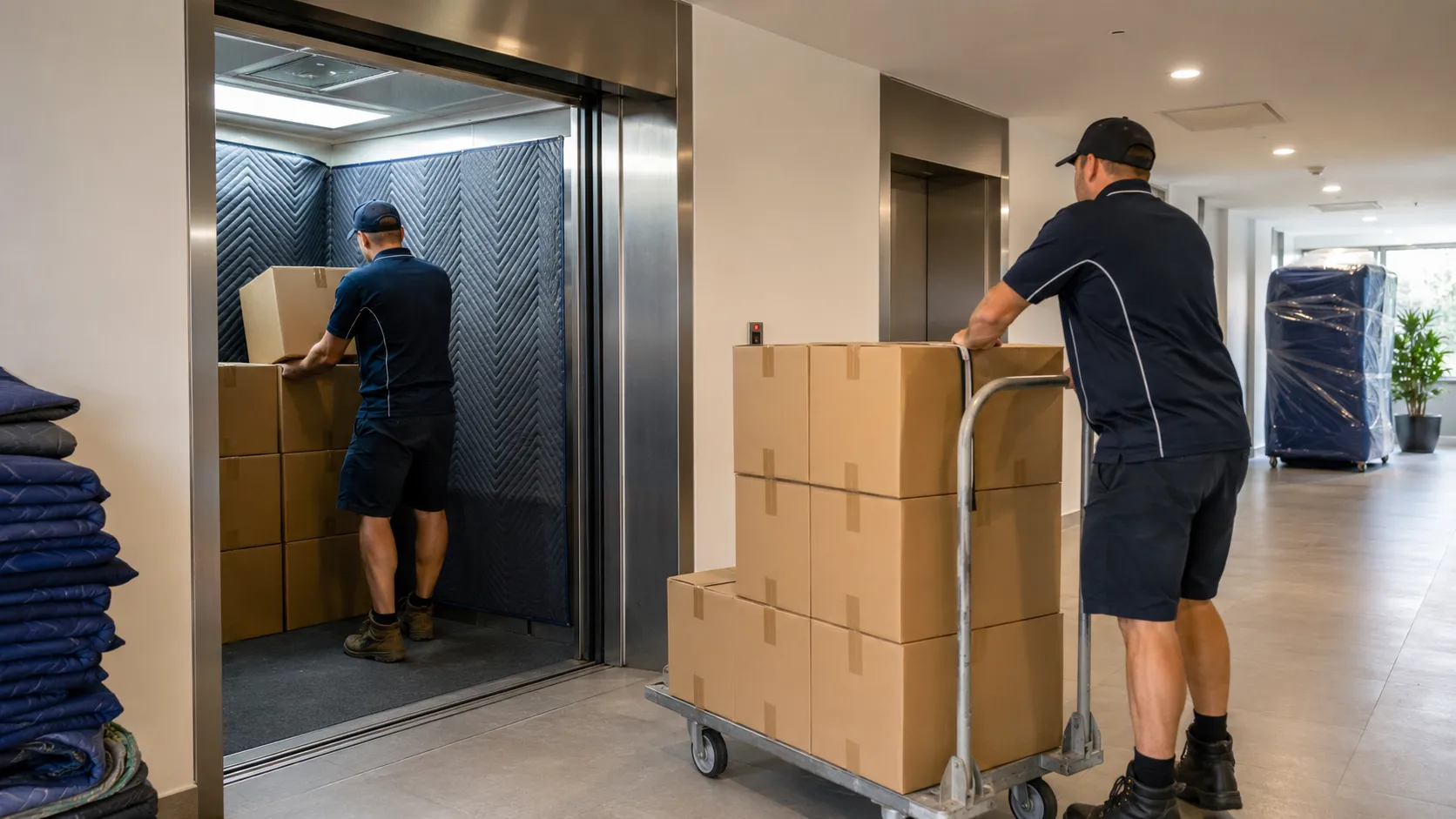
Apartment and townhouse moves often involve building rules that do not apply to detached homes. Lift bookings, restricted moving hours, security procedures and loading-dock requirements should be confirmed as early as possible.
These arrangements may apply at both the property being vacated and the new address.
Obtain the relevant moving rules from the strata manager, building manager, owners corporation or real estate agent.
Residents should review the applicable NSW strata by-laws and any building-specific moving procedures before arranging access through common areas.
Confirm whether the building has:
Some buildings allow moves only during weekday business hours. Others may restrict weekend or public-holiday access.
Provide all time restrictions and building conditions to the removal company before confirming the booking. This allows the crew and vehicle to be planned around the available access window.
Many multi-storey buildings require advance bookings for a goods lift, service lift or designated passenger lift.
Confirm:
Request written confirmation of the booking where possible.
Make sure lift access begins before or at the scheduled arrival time. Delays can occur when the crew arrives but the lift has not been released, padded or placed into moving mode.
Secure complexes may require:
Confirm whether Hunter Coalfields Removals needs to provide insurance documentation before the booking date.
Someone with the correct keys, fobs and access codes should be at the property when the crew arrives. Do not rely on a building manager being available unless this has been confirmed.
Removal crews need wide, stable and unobstructed routes between the truck and the property. Exterior hazards can slow the move and increase the risk of injury or damage.
Walk the full route that the crew will use and view it from the perspective of someone carrying a large or heavy item.
Clear the path of:
Move vehicles out of the driveway before the truck arrives. When a shared driveway is involved, notify neighbours of the scheduled moving time and ask them to keep the access route clear.
Choose the widest suitable entrance as the main access point.
Sweep paths, decks and steps to remove leaves, gravel and loose dirt. Inspect the route for:
Repair hazards where possible. When repairs cannot be completed before the move, mark the area clearly and inform the crew as soon as they arrive.
During wet weather, use suitable absorbent mats at entrances to reduce water being tracked onto smooth flooring. Avoid towels or coverings that can bunch up and create a trip hazard.
Advise the removal company in advance when the property has a steep driveway, long uphill path, multiple outdoor steps or a lengthy carrying distance. The team may need additional time, equipment or crew members.
Make sure gates can open fully and remain securely open without swinging into the access route. Keep keys and gate codes readily available.
Pets should be kept in a closed room, secure crate or another safe location away from open doors and moving paths. Arranging for a friend, family member or pet-care provider to look after them during the move may be the safest option.
Coil garden hoses, remove loose tools and clear garden debris to reduce trip hazards and provide enough space for the crew to move safely.
Items that are fragile, oversized, valuable, mechanically complex or potentially hazardous require additional preparation. Identifying these belongings early gives the removalist time to confirm whether specialist equipment, extra crew members or alternative transport arrangements are needed.
Walk through the property and list items such as:
Provide the approximate dimensions and weight of very large or heavy items. Include photographs showing the item, its current position and the surrounding access.
Photographs can also help document the condition of valuable belongings before transport.
Follow the manufacturer’s instructions when preparing appliances for transport.
Refrigerators and freezers should generally be:
Defrosting often needs to begin 12 to 24 hours before loading, although the appropriate time depends on the appliance. Remove or secure shelves and trays so they do not move during transit.
Refrigerators should usually remain upright during transport where practical. Check the manufacturer’s guidance about how long the appliance should stand before being reconnected.
Washing machines may require transit bolts to stabilise the drum. Locate and install the correct bolts in accordance with the manufacturer’s instructions. Drain hoses and make sure no water remains inside the appliance.
Dishwashers, plumbed refrigerators and gas appliances may need to be disconnected by an appropriately licensed tradesperson. Confirm these arrangements before moving day.
Ask the removal company which fuels, oils, batteries and hazardous materials it is legally and safely able to transport.
Lawnmowers, chainsaws, whipper snippers and similar equipment may need to be drained or prepared in a particular way before loading. Follow both the removalist’s requirements and the manufacturer’s instructions.
Do not pack fuel, gas cylinders, flammable liquids, chemicals or other hazardous substances in the moving truck unless the removal company has expressly confirmed that they can be transported.
Batteries should only be removed where this is safe and recommended for the equipment. Protect exposed terminals and keep removable batteries upright and secure.
Clean powered tools and cover sharp edges, blades and cutting attachments.
Artwork, mirrors and framed photographs should be packed using:
Remove glass shelves, table tops and cabinet doors where practical and pack them separately. Label each component so it can be matched with the correct item after delivery.
Electronics are safest in their original packaging. When original boxes are unavailable, use strong double-walled cartons with enough internal protection to prevent movement.
Place cables, remotes, brackets and small accessories in labelled bags. Keep these bags with the corresponding item. Photograph cable arrangements before disconnecting equipment to make reassembly easier.
Furniture may need to be partially dismantled when it cannot fit through doors, hallways or stairs.
Items that may benefit from advance dismantling include:
Bag and label all screws, bolts and fittings. Attach the sealed bag securely to the corresponding item or keep all hardware in a clearly labelled container.
Wrap polished, painted or delicate surfaces with moving blankets or padded covers to reduce scratches during transport.
Confirm with the removalist whether customers are expected to dismantle furniture themselves or whether this service is included in the booking.
Accurate information helps the removal company estimate the job, choose the correct vehicle and bring suitable equipment.
The street address alone does not provide enough information for detailed planning.
Tell the removalist about:
Mention whether the truck can park directly outside the entrance or whether belongings must be carried from another street, car park or loading area.
For apartments, provide the floor number, lift-booking details and the route between the loading area and the unit. Include any height limits that affect access to underground garages or loading docks.
Photographs and measurements are particularly useful when the property has difficult access. Sending accurate details early reduces the likelihood of delays, vehicle changes, additional handling or unexpected costs.
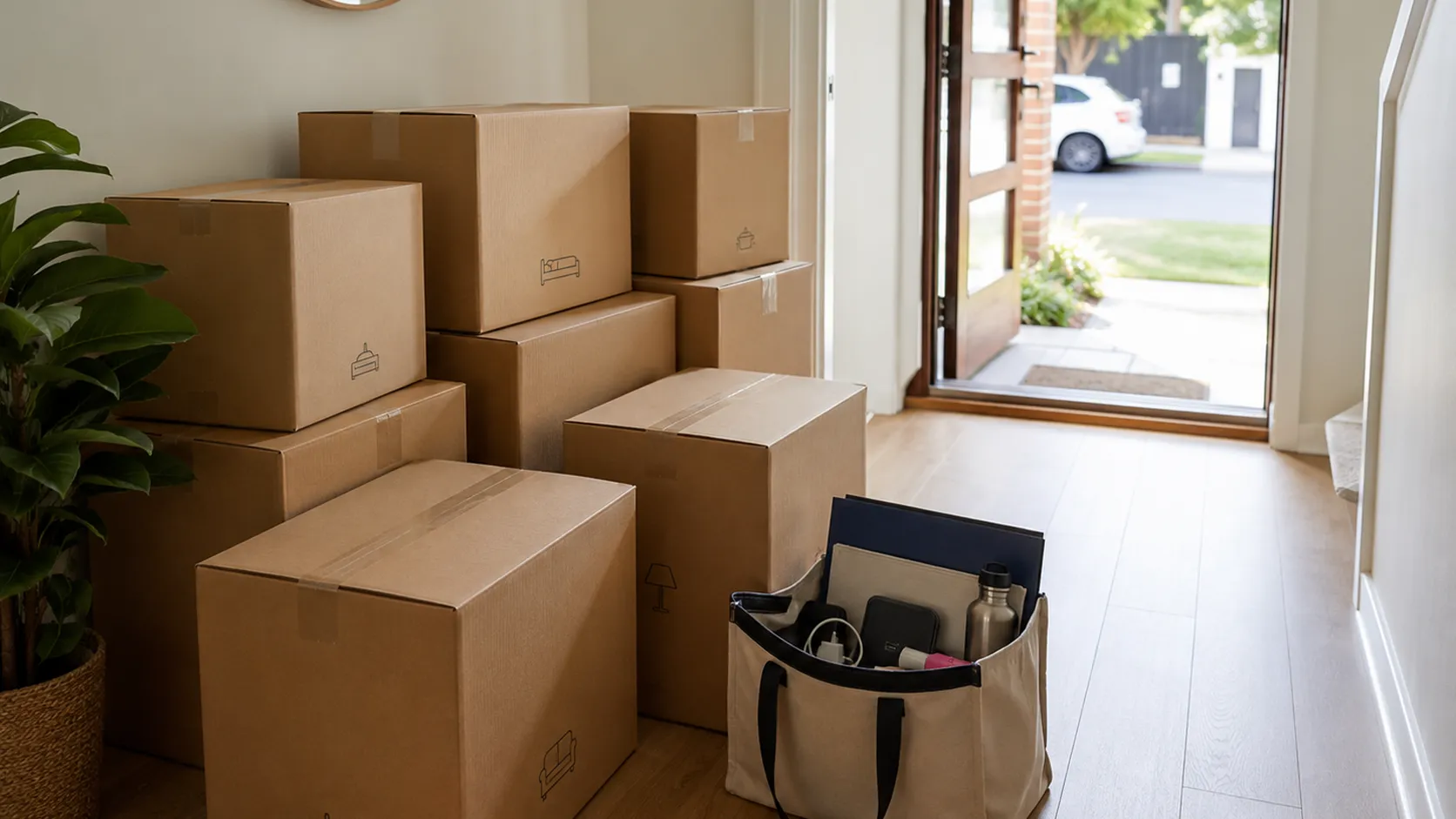
The day before the move is the final opportunity to confirm that access, packing and paperwork are ready.
Households should also review commonly overlooked moving details, including utility arrangements, key returns, important documents and final access confirmation.
Check the following with the removal company:
Check the street again for temporary parking signs, roadworks or other changes that could affect the truck.
Remind neighbours when access to a shared driveway or nearby parking area needs to remain clear.
Taking time to choose the right moving boxes helps protect belongings, keeps carton weights manageable and allows boxes to be stacked safely in the truck.
All boxes should be:
Avoid leaving loose miscellaneous belongings for the crew to collect individually. Pack or group these items so it is clear how they should be handled.
Make sure appliances have been emptied, cleaned and prepared according to the manufacturer’s instructions.
Pack a separate bag or box containing items that will be needed during the move and immediately after arrival, such as:
Keep this kit in a private vehicle or another clearly identified area that will not be loaded onto the truck.
Valuable jewellery, identification documents, cash and sensitive personal records should generally remain with the customer rather than being packed with household belongings.
Before the removalists arrive, confirm that:
A successful moving day depends on more than lifting and transporting furniture. Parking, truck access, building requirements, difficult entry points and special items can all affect how the move is completed.
Preparing these details before the truck arrives helps minimise delays, protect the properties and give the crew a safe and efficient route for moving belongings. It also allows the removal company to provide a more accurate plan based on the actual access conditions.

