
A moving day is more likely to run smoothly when the removalist understands exactly what to expect before the truck arrives. Sharing important details in advance gives the moving team time to plan the schedule, select the right vehicle and equipment, allocate enough staff and determine how individual belongings should be handled. Information about parking, property access, stairs and items requiring extra protection can help prevent delays and create a safer, more organised moving experience.
As an experienced removalist in Hunter Valley, Hunter Coalfields Removals encourages customers to provide clear and accurate information when requesting a quote and again before moving day. This includes access conditions at both properties, a complete inventory, heavy or fragile belongings, packing requirements, timing, storage arrangements and any additional services required. Confirming these details early can lead to a more accurate quote, fewer unexpected costs and better protection for belongings throughout the move.
Accurate pick-up, delivery and contact information helps prevent confusion and delays on moving day. Removalists rely on these details to plan their route, arrival time, parking arrangements and access to each property.
Customers should also review commonly overlooked moving details, including key returns, access confirmation, utility arrangements and important documents.
Information should be provided as early as possible and reconfirmed shortly before the move, particularly if keys, settlement times or building restrictions are still being finalised.
Provide the full street address for both the pick-up and delivery properties. This should include:
Vague directions such as “near the shops” or “at the top of the hill” may not be enough for a large removal truck. This is especially important for rural and semi-rural properties where mapping applications may direct drivers to the wrong gate or access road.
For rural properties, explain where the main entrance is located and whether there are any narrow bridges, cattle grids, low branches, unsealed sections or weight restrictions along the route.
Provide the full name and mobile number of the person who will be present at each address. If different people will manage the pick-up and delivery, make it clear who has authority to answer questions and make decisions about access, furniture placement or additional services.
A back-up contact is also useful if the primary person is delayed, driving or outside mobile reception. At least one responsible person should remain contactable throughout the move.
Where reception is unreliable, particularly at rural properties, agree on a meeting location or arrival time in advance.
Explain exactly how the removalists will gain access to each property. This may include:
Keys, codes and remotes should be ready before the truck arrives. Waiting for access can add unnecessary time and may affect the final cost of the move.
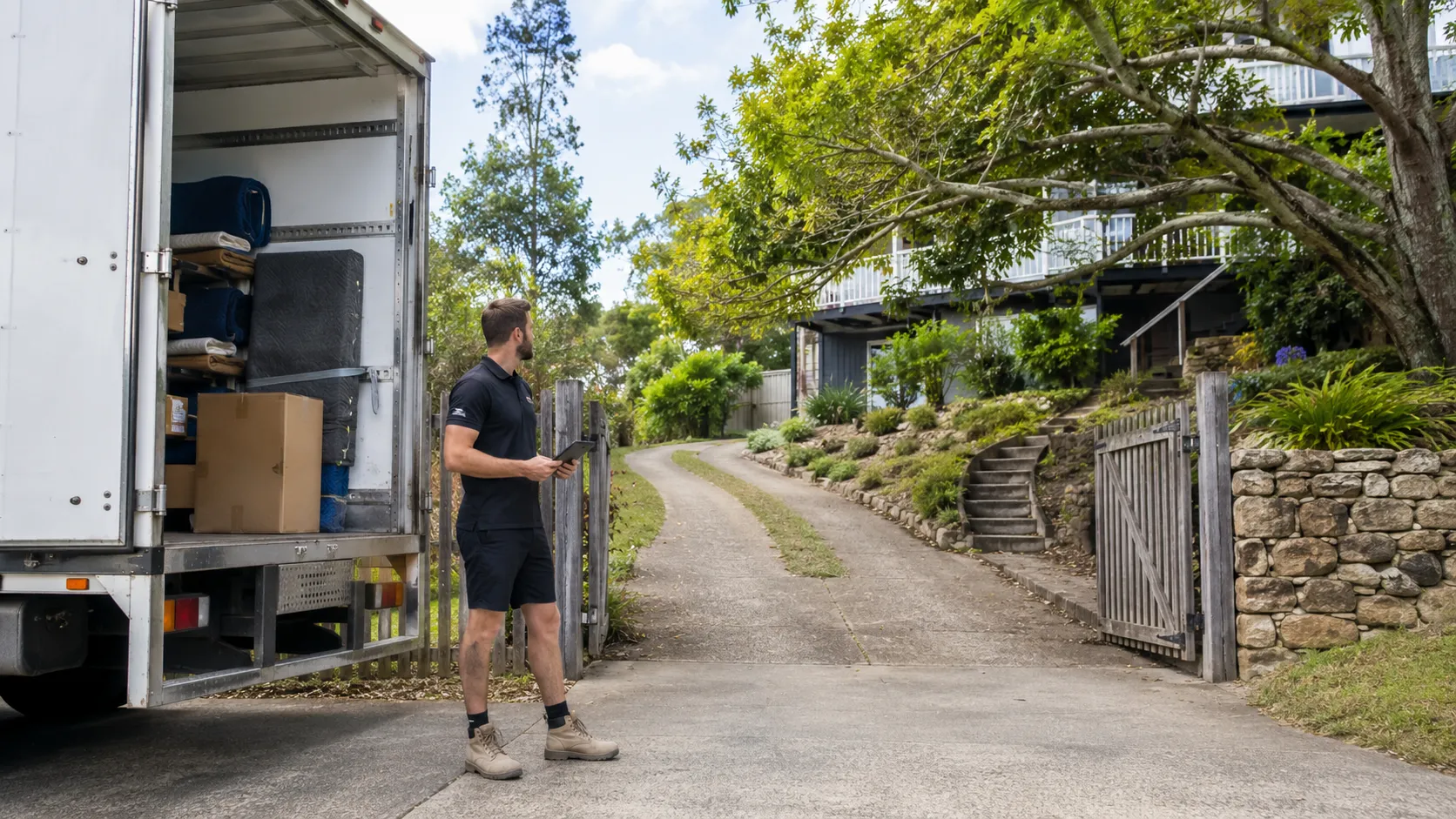
Truck access at both properties is one of the most important details to discuss before moving day. The position of the truck, the distance to the entrance and any obstacles along the carrying route directly affect the time, equipment and number of removalists required.
Understanding difficult access conditions before moving day helps customers provide accurate information about parking, stairs, narrow entry points and long carrying distances.
Customers should consider where the truck can legally and safely park, how close it can get to the building and whether the crew will need to carry furniture through stairs, narrow paths or shared areas.
Describe the street layout at both addresses. Narrow roads, cul-de-sacs, steep hills, tight bends, divided roads and busy intersections can make it difficult to position or turn a large truck.
Advise the removalist about restrictions such as:
Where a council permit or parking arrangement may be required, confirm who is responsible for organising it and allow enough time for the application.
If parking is usually limited, customers may be able to move their own vehicles early or speak with neighbours about leaving suitable space available. Any arrangement must still comply with local parking and road rules.
Provide details about the length, width, slope and surface of the driveway. Steep, narrow, soft or loose-gravel driveways may not be suitable for a fully loaded removal truck.
Customers should also mention:
If the main truck cannot reach the property safely, the removalist may recommend a smaller shuttle vehicle or a longer carrying route. These arrangements can affect the required time and cost, so they should be discussed before the move.
Security gates, intercoms and boom gates should be disclosed in advance. Any key, remote, swipe card or code needed for entry must be available when the crew arrives.
Apartments and commercial properties may have height restrictions at underground car parks or loading docks. Provide the exact clearance height where possible, as even a small difference can determine whether the truck can enter.
Customers should also confirm whether loading bays need to be reserved and whether there are limits on how long a vehicle can remain in the area.
The carrying distance between the truck and the property can significantly affect loading and unloading times. Estimate the distance from the likely parking position to the entrance and mention whether the route includes:
A long carrying distance may require extra staff or equipment such as trolleys and dollies.
Removalists need to know whether either property has internal or external stairs. Provide an approximate number of steps or flights and explain whether the staircase is narrow, steep, curved or spiral.
Other useful details include:
Photographs and approximate measurements can help the removalist assess difficult stair access before moving day.
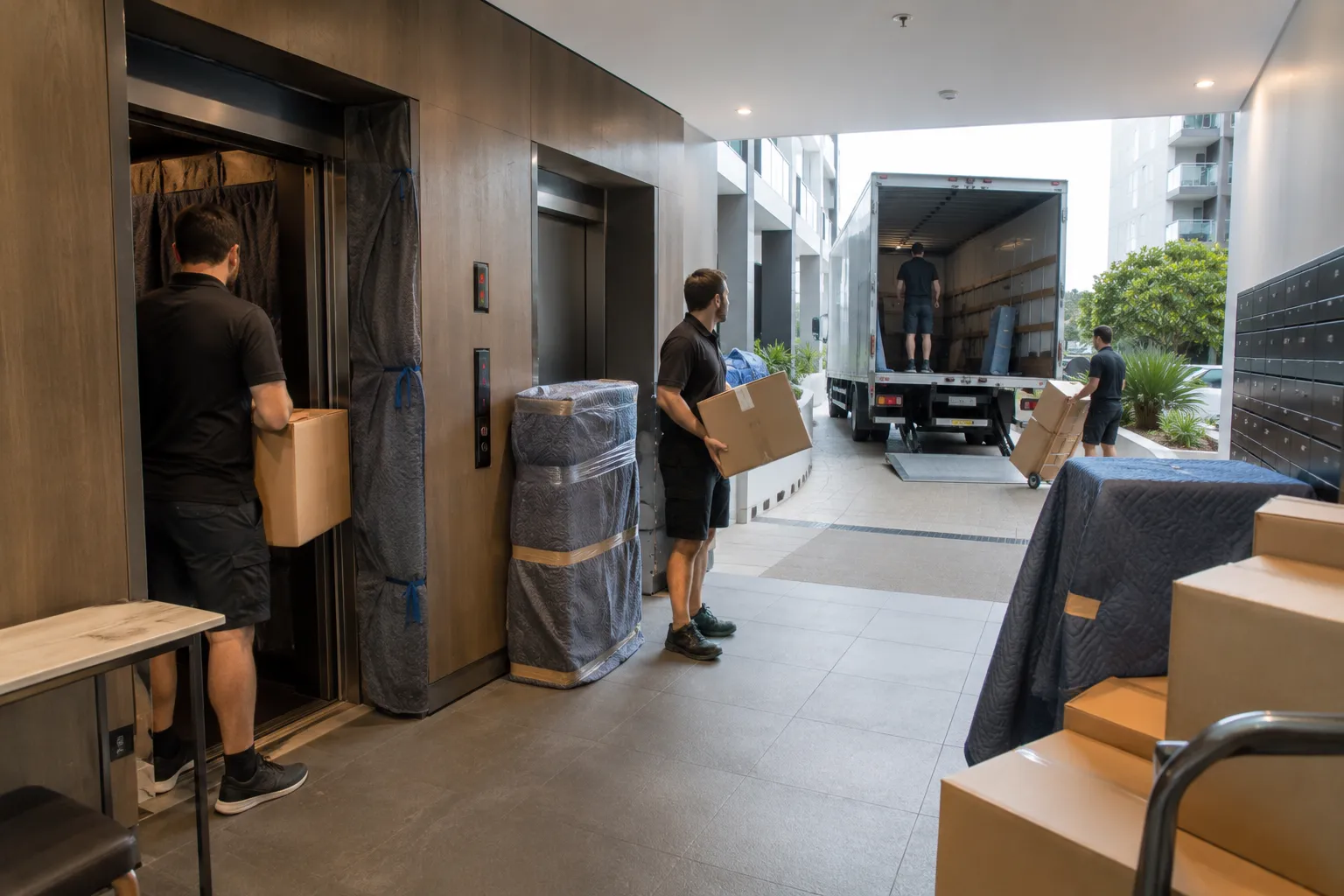
For apartments and commercial buildings, confirm whether a passenger or goods lift is available. The removalist may need to know the internal dimensions, weight capacity and distance from the lift to the property.
Ask building management whether:
Apartment residents should also check the property’s strata by-laws for rules affecting parking, noise and the use of shared areas during a move.
These requirements should be communicated before the booking so the removalist can prepare appropriately and avoid delays or building-management disputes.
A complete and accurate inventory helps the removalist allocate the right truck, equipment and number of staff. It also allows the business to provide a more realistic estimate of the time and cost involved.
A detailed inventory helps the removalist understand the true size of the household move, as two homes with the same number of bedrooms can contain very different volumes of furniture, boxes and outdoor belongings.
A room-by-room list, photographs or a video walkthrough can provide a clearer picture of the load.
List the main furniture in each room, including:
Mention anything that is oversized, unusually heavy or made from delicate materials. Modular furniture should be described as separate pieces rather than one item.
Identify each appliance that needs to be moved, including:
Provide approximate dimensions for large appliances and explain whether anything is plumbed in, connected to gas or mounted to a wall. Customers should follow the correct steps to prepare a fridge and washing machine before moving, including defrosting, draining, drying and securing loose components.
Removalists do not necessarily disconnect or reconnect plumbing, electrical or gas services. Customers should confirm what preparation is required and arrange a qualified tradesperson where necessary.
Refrigerators and freezers may need to be emptied, defrosted and cleaned before moving. Customers should follow the manufacturer’s instructions and ask the removalist how long the appliance should remain upright before being switched back on.
Garages and sheds are often underestimated when preparing a moving inventory. Tools, machinery and outdoor furniture can add considerable weight and volume.
Include items such as:
Explain whether large items will be emptied, cleaned or dismantled before collection.
Removalists may be unable to transport fuel, gas bottles, chemicals, ammunition, paint, certain batteries and other hazardous materials. Restrictions vary between businesses, vehicles and insurance policies. Items that cannot be transported may be taken to an appropriate recycling facility or the NSW EPA’s Household Chemical CleanOut service.
Potentially restricted items should be identified when requesting a quote. Customers can then confirm what the removalist is permitted to carry and make alternative arrangements where necessary.
Fuel should generally be removed from lawn equipment and similar machinery before the move. Gas bottles and chemicals should not be packed into unmarked boxes.
Large, heavy or fragile belongings require additional planning. Without advance notice, the removalist may arrive without the staff, equipment, packing materials or vehicle space needed to move the item safely.
Provide photographs, measurements and an estimated weight where possible. Access conditions at both properties should also be explained.
Mention any furniture that may not fit through a standard doorway without being tilted, dismantled or moved through an alternative route.
Examples include:
State whether each item can be dismantled and whether the customer expects the removalist to complete the disassembly and reassembly.
Furniture assembled inside a room may not fit through the doorway in one piece. Flat-pack furniture may also be more vulnerable to damage when moved while fully assembled.
Heavy belongings may require additional crew members or specialised moving equipment. Examples include:
Provide the item type, approximate size and current location. Mention any stairs, sharp turns, narrow doorways or soft ground between the item and the truck.
Pool tables, gym equipment and some other items may require partial disassembly by a specialist. Pianos may also require particular equipment and handling methods depending on their type, weight and access conditions.
Identify belongings that need extra protection, including:
Advise whether original boxes or specialised packaging are available. Point out pre-existing chips, scratches, loose glass, weak joints or hairline cracks so the condition can be recorded and appropriate care taken.
Clear handling instructions should also be shared. For example, some artwork, appliances or instruments may need to remain upright and should not have other items stacked on top of them.
Customers moving valuable belongings should ask what transit protection applies, review any exclusions and determine whether separate insurance is appropriate. Coverage and liability can vary, so this should be discussed before moving day rather than assumed.
The removalist should know whether the household will be fully packed before the crew arrives or whether packing assistance is required. Packing, dismantling and other services affect the schedule, staff allocation and quotation.
Customers should confirm exactly what is included in the booking.
Advise whether assistance is required with:
Professional packing usually needs to be arranged in advance. It should not be assumed that the moving crew can pack loose belongings on the day without affecting the schedule.
If customers are completing their own packing, boxes should be securely sealed and clearly labelled with their contents, destination room and any relevant handling instructions.
Identify all furniture that needs to be dismantled, including:
Confirm whether the customer will complete this work before moving day or expects the removalist to do it.
Fixtures attached to walls, floors, plumbing or electrical systems may need to be removed by an appropriate tradesperson. This can include wall-mounted televisions, hardwired appliances, built-in shelving and some fitted furniture.
Let the removalist know whether boxes and packing materials are needed. Depending on the service, the business may be able to supply:
Packing-material requirements should be discussed early so there is enough time to deliver or collect supplies before the move.

Clear timing information helps the removalist plan the truck, crew hours and delivery sequence. It can also reduce waiting time, overtime and parking complications.
The proposed start time should be based on when the crew can access the property, not simply when the customer hopes to begin.
Advise the removalist about any fixed access times, including:
If a lift or loading area is only available for a limited period, the crew may need to adjust the loading order or start time.
Explain when and where keys will be available. If keys need to be collected from an agent, confirm the office opening hours and whether someone else can collect them if the customer is delayed.
At the delivery property, identify who will meet the truck and provide access. A trusted back-up person with a spare key can help prevent waiting time if the main contact is delayed.
When a move and property settlement occur on the same day, customers should tell the removalist and provide the expected settlement time. Access should not be assumed until settlement is complete and the keys have been formally released.
Contingency options may include:
The availability and cost of these options will depend on the removalist’s schedule, truck availability, storage arrangements and company policies. Customers should discuss the possibilities before moving day rather than waiting until a delay occurs.
Not every move involves transporting all belongings directly from one property to another. Some items may need to go into storage, be delivered to a family member or office, or remain on the truck temporarily while access is arranged.
These requirements should be explained before moving day so the truck can be packed in the correct order.
When items are being taken to a storage facility, provide:
Confirm whether the storage unit is large enough for the intended belongings. Items being stored for an extended period may require additional wrapping or protection from dust, moisture and movement.
The removalist should also know whether the facility provides trolleys or allows the truck to park close to the unit.
For split deliveries, provide a separate item list and complete access information for every address.
Each location should include:
Furniture and boxes should be clearly labelled according to their destination. Labels such as “New Home”, “Storage” and “Second Delivery” help the crew separate the load and reduce the risk of items being unloaded at the wrong address.
The delivery order must be confirmed before loading because items needed at the first stop must remain accessible.
Identify anything that may be needed before the entire move is complete, such as:
Essential items are often best kept with the customer rather than loaded into the truck. Where this is not practical, they should be packed separately and clearly labelled so they do not end up underneath furniture or at the back of a storage unit.
A few days before the move, customers should reconfirm the main booking details and report any changes.
The final check should cover:
Photographs or a short video walkthrough can be particularly helpful if access conditions or the inventory have changed since the original quotation.
Clear communication gives the removalist the information needed to allocate the right truck, crew, equipment and schedule. By confirming the inventory, property access, parking, fragile or heavy items, packing requirements, timing and storage arrangements, customers can reduce delays, avoid preventable costs and better protect their belongings throughout the move.
Hunter Coalfields Removals can prepare more effectively when potential challenges are raised before moving day. Providing complete information and confirming any changes early helps create a safer, more organised and less stressful move from collection through to final delivery.

