
A rainy forecast can make an already busy moving day feel uncertain. Furniture may get wet between the front door and the truck, cardboard boxes can weaken on a damp driveway and muddy footprints may end up on freshly cleaned floors. Rain does not automatically mean a move must be postponed, but it does require extra preparation to protect belongings and keep everyone safe.
For anyone moving house in the Hunter Valley, Hunter Coalfields Removals can be contacted to discuss the forecast, access conditions and arrangements for wet weather. Knowing what to prepare, which items need extra protection and when conditions may make moving unsafe can help reduce delays and prevent avoidable damage.
A rainy forecast alone is not enough to determine whether a move should proceed. The intensity of the rain, access at both properties, road conditions and the safety of carrying furniture all influence the decision.
Contact the removalist as soon as wet weather looks likely. An early conversation allows time to discuss potential problems, confirm booking arrangements and establish how changing conditions will be handled. Check the forecast again the evening before and on the moving day, as showers can develop or intensify unexpectedly.
Brief showers may be manageable when the route between the truck and the entrance is short and sheltered. Heavy rain, strong winds, flooding and slippery outdoor stairs present greater challenges, specifically when movers are carrying bulky furniture or heavy boxes.
Describe the access conditions at both addresses, including sloping driveways, uncovered paths, slippery paving and areas where water collects. Poor visibility and waterlogged ground can also affect vehicle positioning and safe access.
If conditions deteriorate during loading or unloading, the team may need to pause and reassess the situation. Flooded access should never be treated as a minor inconvenience. Do not attempt to cross floodwater to keep the move on schedule. Inform the removalist about affected properties or roads and follow current emergency advice.
When comparing a removalist in Hunter Valley, ask how wet-weather conditions are assessed and what protection may be available for furniture and other belongings.
Contact movers before moving day to explain any concerns about the properties, particularly if there is limited covered access or a steep driveway. Confirm which protective materials are included in the booking and whether additional preparation is needed.
Also, check the booking terms for weather-related delays, rescheduling fees and cancellation arrangements. If a property handover or key collection has a fixed deadline, explain this early so the timing can be considered without compromising safety.
Allow additional time for loading and unloading if heavier showers require work to pause or protective coverings to be adjusted. The article on how long a house move can take provides useful timing context, although the actual duration will depend on the conditions and access at both properties.
The aim is to limit exposure outdoors while maintaining safe, clear pathways indoors. Preparing the properties before the truck arrives can reduce the amount of water entering the home and help the moving team work more efficiently.
Identify any covered loading areas, verandahs or sheltered entrances that could provide temporary protection. If there is no suitable shelter, discuss how belongings will be covered during the journey between the property and the truck.

Leave packed boxes inside until the removalists are ready to load them. Placing everything on a verandah or driveway beforehand can expose cardboard to rain, runoff and windblown spray. Even a covered outdoor area may have a wet floor or an exposed edge.
Keep boxes away from open doors and areas where water is being tracked inside. Tell the movers which belongings are vulnerable to moisture, including mattresses, upholstered furniture, books and important documents, so suitable protection can be considered.
Prepare a separate waterproof bag for essential documents, medications, chargers and a change of clothes. Keeping these items with you means they remain accessible without needing to locate them among the packed boxes after arrival.
Good packaging is important, but cardboard should not be treated as waterproof. The article on choosing suitable moving boxes can help with selecting appropriate packaging before moving day.
Wet-weather floor protection needs to provide dependable footing as well as limit dirt and moisture. Loose towels can slide or fold beneath someone's feet, while plastic sheets may become slippery when wet. Overlapping floor coverings can also catch shoes or trolley wheels.
Discuss suitable protection with the removalist before laying anything down. Explain whether the carrying route includes tiles, timber, carpet or changes in floor level and agree on how the coverings will be positioned and maintained.
Keep children and pets away from active loading areas. If water accumulates near a doorway, alert the moving team so the problem can be addressed safely. Avoid stepping into the carrying route to wipe a floor or adjust a mat while someone is moving furniture.
Before unloading begins, identify an indoor area where boxes can be placed without obstructing doorways or walkways. Choose a space away from the open entrance where belongings can be checked without being exposed to additional rain.
Decide which rooms should receive moisture-sensitive items first and where damp packages can be placed for inspection. Keep clean, dry towels and spare rubbish bags nearby for temporary use, but avoid placing wet materials directly on timber furniture, carpet or upholstery.
A clear receiving area also reduces the chance of boxes being moved repeatedly while the team searches for space. If possible, keep one section available for items that need checking before they are taken to their final rooms.
Wet outer packaging does not necessarily mean the contents have been damaged. However, damp cardboard and wrapping can lose strength, transfer moisture to other surfaces or trap water against furniture and fabrics.
Inspect visibly affected belongings before following the usual unpacking order. A softened box or wet furniture cover may need attention sooner than a dry carton of everyday items. Keep affected belongings separate from dry items until their condition has been checked.
Once an item is safely indoors, check whether moisture is confined to its covering or has reached the surface underneath. Ask the removalist before removing protective materials from furniture that still needs to be carried into position.
Remove wet blankets, cardboard and other outer packaging when it is safe to do so. Keep damp materials separate from dry belongings and avoid leaving wet wrapping pressed against furniture or upholstery for extended periods.
For accessible furniture surfaces, follow the manufacturer's care instructions. Where appropriate, gently blot surface moisture with a clean, dry cloth rather than rubbing the material or applying strong heat. Timber finishes, leather and upholstery respond differently to moisture, so avoid using cleaning products or treatments without checking their suitability.
Do not seal a damp item inside fresh wrapping for storage. This can trap moisture and delay drying. If water has penetrated upholstery, timber or another delicate material, seek professional care advice.
Damp cardboard can lose strength around its base, corners and taped seams. A carton that looks intact from above may no longer support its contents safely when lifted.
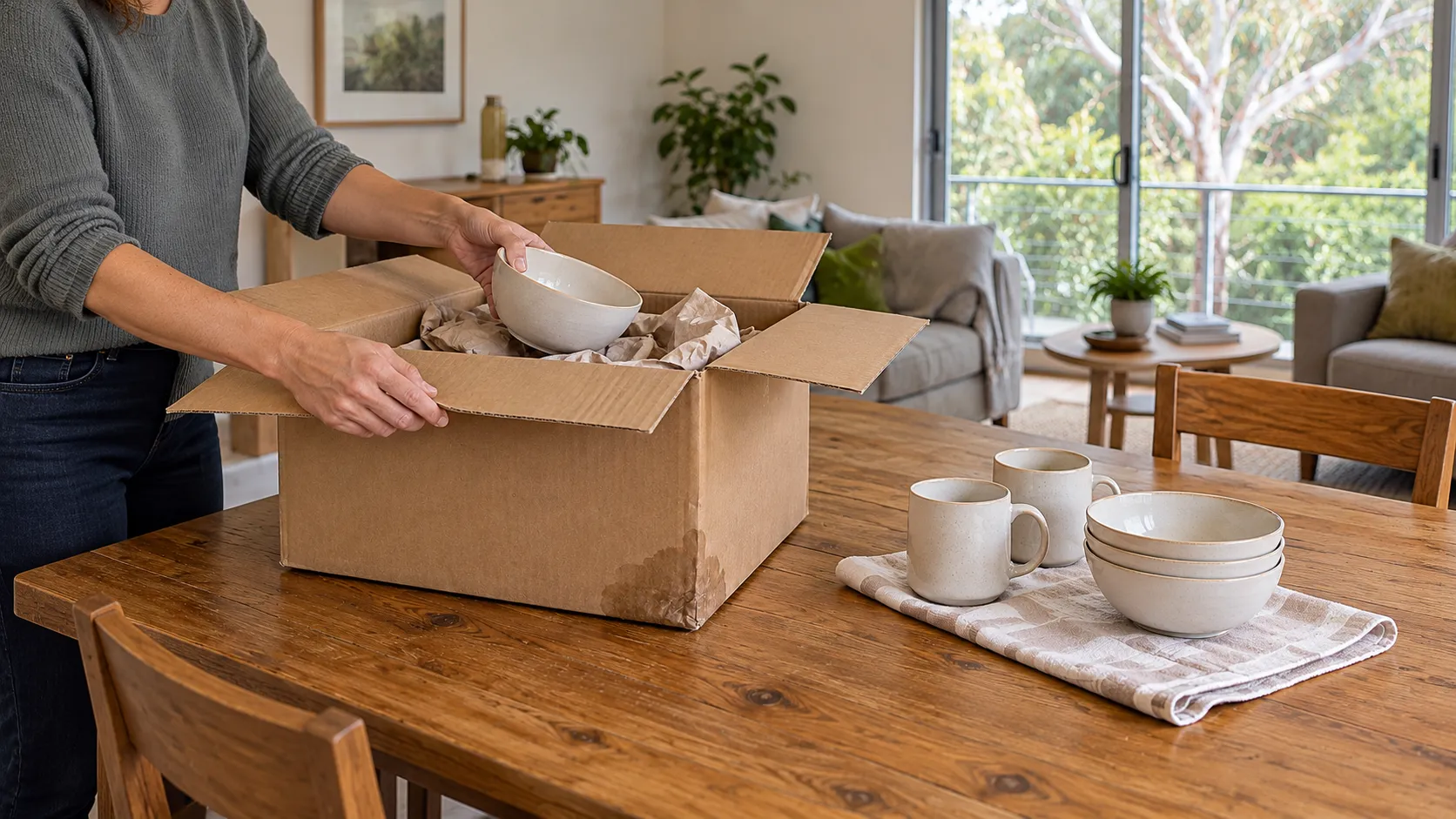
Avoid carrying weakened boxes by their handles or lifting them from a softened base. If a box is already in a safe, accessible position, remove its contents carefully before attempting to move the carton again. Ask for help if it contains heavy items or appears close to collapsing.
Inspect each item as it is unpacked. Dry belongings can be transferred into clean, dry packaging if necessary. Items showing signs of moisture should be kept separate while their condition is assessed, rather than packed tightly alongside unaffected belongings.
Dispose of damaged cardboard when practical and keep loose packaging out of walkways to prevent additional trip hazards during unpacking.
Books, important documents, photographs and fabrics deserve prompt attention because moisture may not be obvious through their outer packaging. Check the bottom layer of affected boxes as well as the items on top and follow suitable care advice if pages, textiles or finishes have become wet.
Electrical equipment requires caution. If an appliance, cable or other electrical item has become wet, do not plug it in or switch it on to test whether it works. Arrange assessment by a qualified professional, including a licensed electrician where electrical work is required. A dry-looking exterior does not guarantee that internal components are safe to use.
NSW SES provides further guidance on water-affected electrical equipment, including the need for inspection by a licensed electrician before using affected appliances again.
For important documents or valuable items, avoid aggressive drying methods that could cause further damage. Seek suitable specialist advice when the material cannot be dried safely using ordinary care.
A few preparations can make wet-weather moving more manageable without adding unnecessary work to an already busy day.
Before moving day, confirm the booking arrangements with the removalist, review the latest forecast and identify any access issues at both properties. Pack vulnerable belongings carefully, prepare a waterproof bag for essentials and keep useful supplies.
On the day, keep packed belongings indoors until loading, maintain clear carrying routes and communicate promptly if conditions change. At the destination, prepare a dry receiving area and inspect damp packaging before unpacking everything as usual.
The most important consideration is safety. A moving schedule should not take priority over hazardous access, flooding or slippery carrying conditions. Being prepared gives the removalist more information to work with and makes it easier to respond when the weather changes.
Moving house in the rain requires extra care, but thoughtful preparation can help protect furniture, reduce moisture damage and keep both properties safer during loading and unloading. Hunter Coalfields Removals can be contacted to discuss an upcoming move and any concerns about forecast rain or property access. Planning and confirming the arrangements before moving day can make the process more manageable.

